Dear friends,
Wednesday was a huge day. Huge.
“I’m still trying to figure out what this conversation is about”
At 11:30am we met with Oliver Ragsdale of the Carr Center in downtown Detroit. This is the venue that hosted the NPR event we covered Day 12.
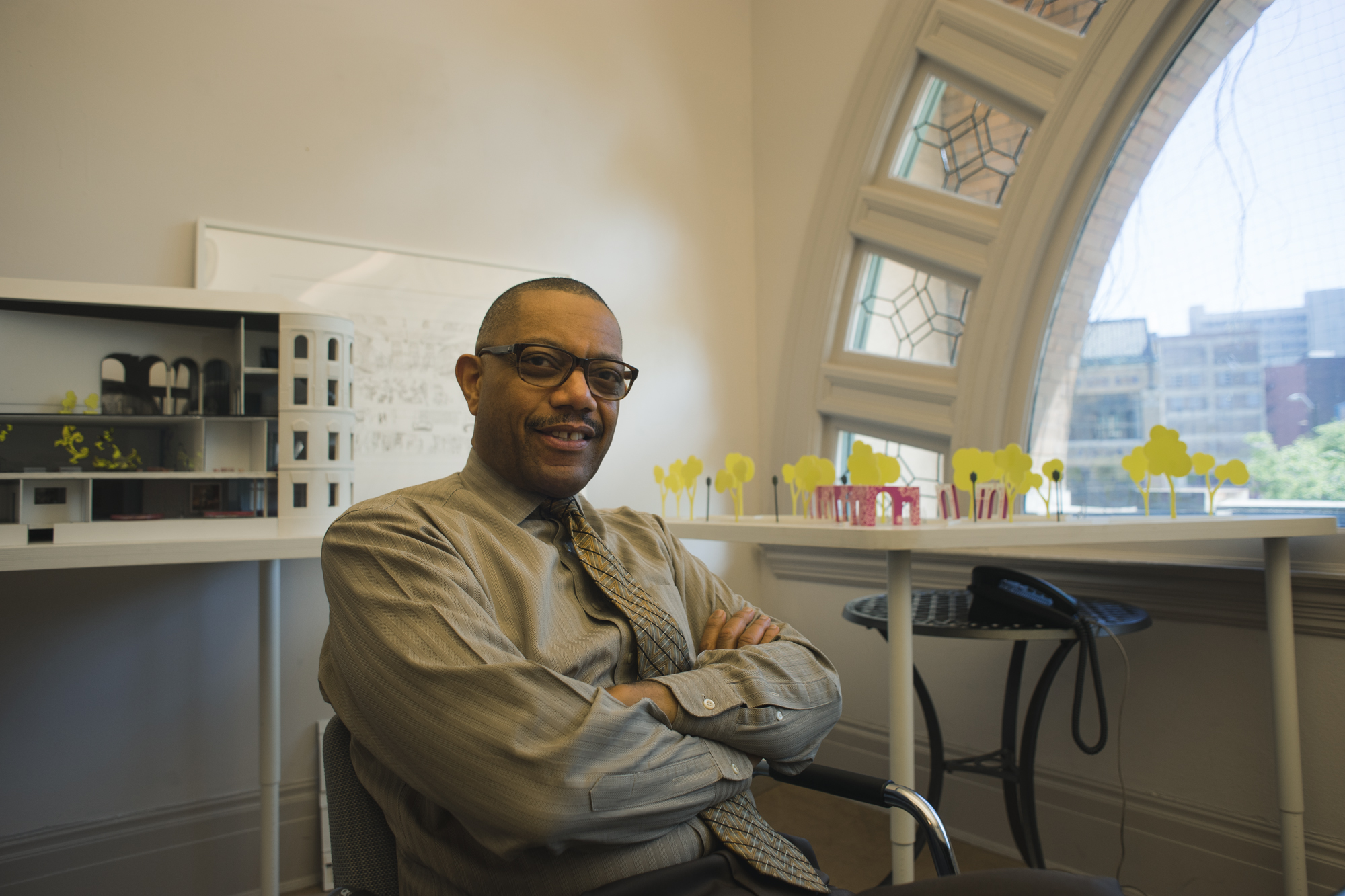
We asked for another meeting to discuss further the city’s re-emergence on the national artistic scene and our possible opportunities of working at the Carr Center.
One antithesis we’ve drawn many times between New York and Detroit is that New York has a saturated theatre market while Detroit has an unsaturated one.
“I don’t know what you mean by unsaturated” Oliver interjected. “We have something in the neighborhood of 500 nonprofits.” He went on saying those nonprofits have struggled and continue struggling to build an audience (in the Carr Center’s for case 25 years); they also have difficulty finding funding. Oliver doesn’t like the idea of two newbies coming in and taking resources away from those businesses. “If you open a venue I will chase you out. I’ve done it before and I’ll do it again.”
His point was not to scare us away. It was to encourage us to do something different. He’s got a venue; what can we bring to the table?
According to Oliver, “you don’t see a lot of entrepreneurship in theatre. Business models are the same, only the products are different.” Here he is talking about the get-backers-fund-a-production model.
That’s very true in a broader sense, too: the repertory model has all but gone by the wayside but many companies stick to it as well as many training programs. Ours is working hard to address the changing landscape, but there are still a lot of questions.
Here’s one of them: what now?
“Do a hybrid” get backers and a different model, that’s Oliver’s advice.
Then he asked us a question: “What are you two doing here?” He explained “I’m still trying to figure out what this conversation is about.”
We explained that we are college students studying directing in Detroit on a grant to investigate whether or not we would like to move here and start a theatre and film company.
“You should have told me that from the beginning” he said. He then suggested we create a satellite program (again mirroring a suggestion from Kirk). “You should think about an affiliation model. A satellite outpost that somehow carries the moniker [of UNCSA] and does something different.”
I said this to Kirk when he made that suggestion: we’re not educated to teach, we’re educated to direct, act and make films. We could teach and do it well, but building a full-fledged educational program is not our main goal, even if education is part of our plan. Additionally, running a theatre company is a full-time job; directing shows would be overtime. We’d work 14-18 hour days just with those responsibilities; creating a UNCSA affiliate program would be next to impossible, unless someone else ran it or ran our company.
Then he mentioned the New World Symphony in Miami Beach, FL: “Established in 1987 under the artistic direction of Michael Tilson Thomas, this unique educational environment prepares gifted graduates of distinguished music programs for leadership positions in orchestras and ensembles around the world” (from their website). Oliver comments “You could do something like that…I don’t know of a [theater] company that’s based on that model.” This somewhat parallels our idea of doing summer stock work with students, just more permanent sounding. It could be a hybrid idea, again: do some kind of training component with the summer stock.
Then we asked the big question of how do you engage the whole community as opposed to just the upwardly mobile suburban whites. “I think the dialogue is created by the work you do, not by artificial manipulation, if you will.” This ties in directly with Emilio’s suggestion of doing work that starts a new kind of conversation.
Hitting bedrock bottom
After leaving Oliver we met with Bryan Waldron from Bedrock Real Estate which handles all of Dan Gilbert’s properties. In fact, Bryan’s office is in the large Quicken Loans building in the heart of downtown.
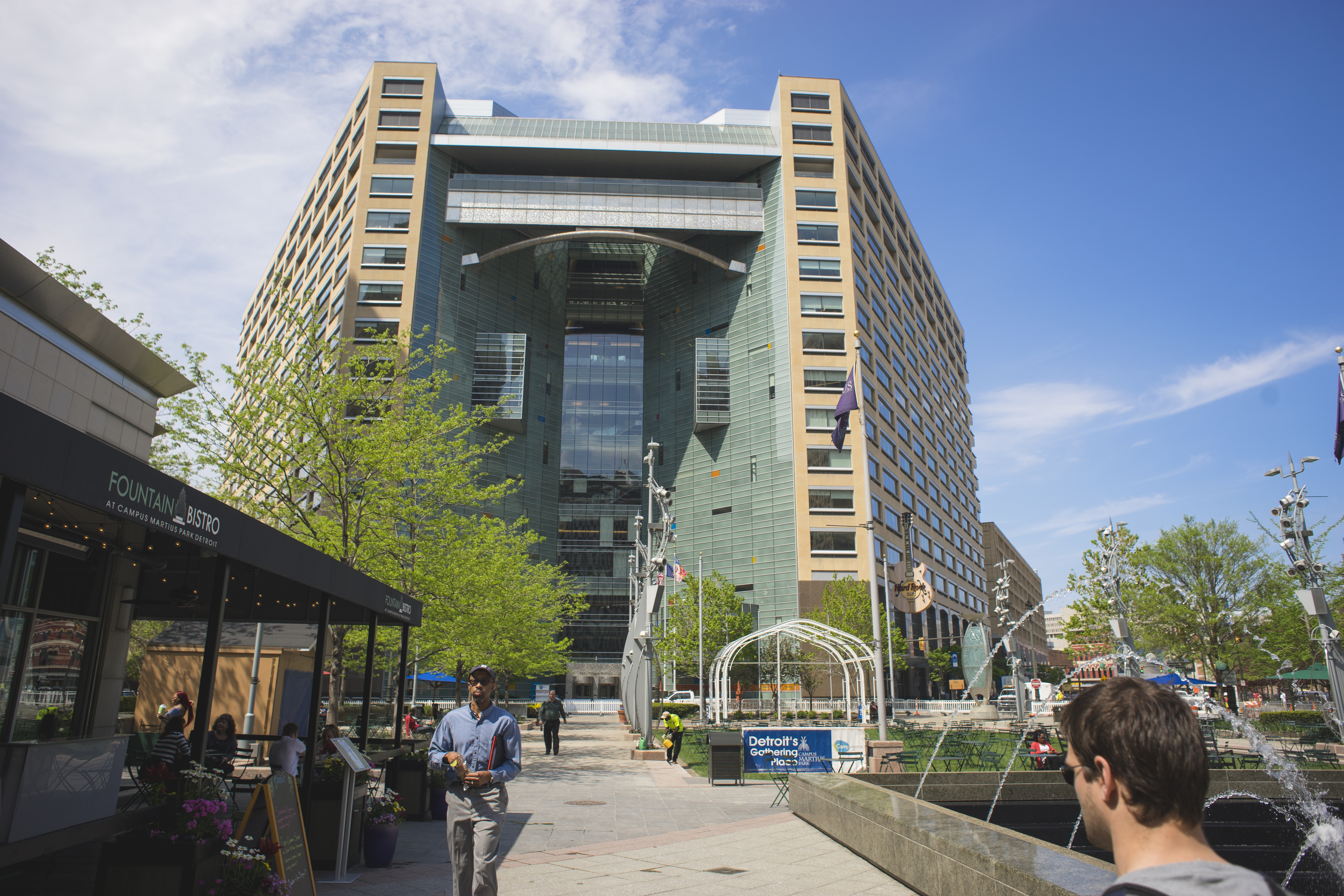
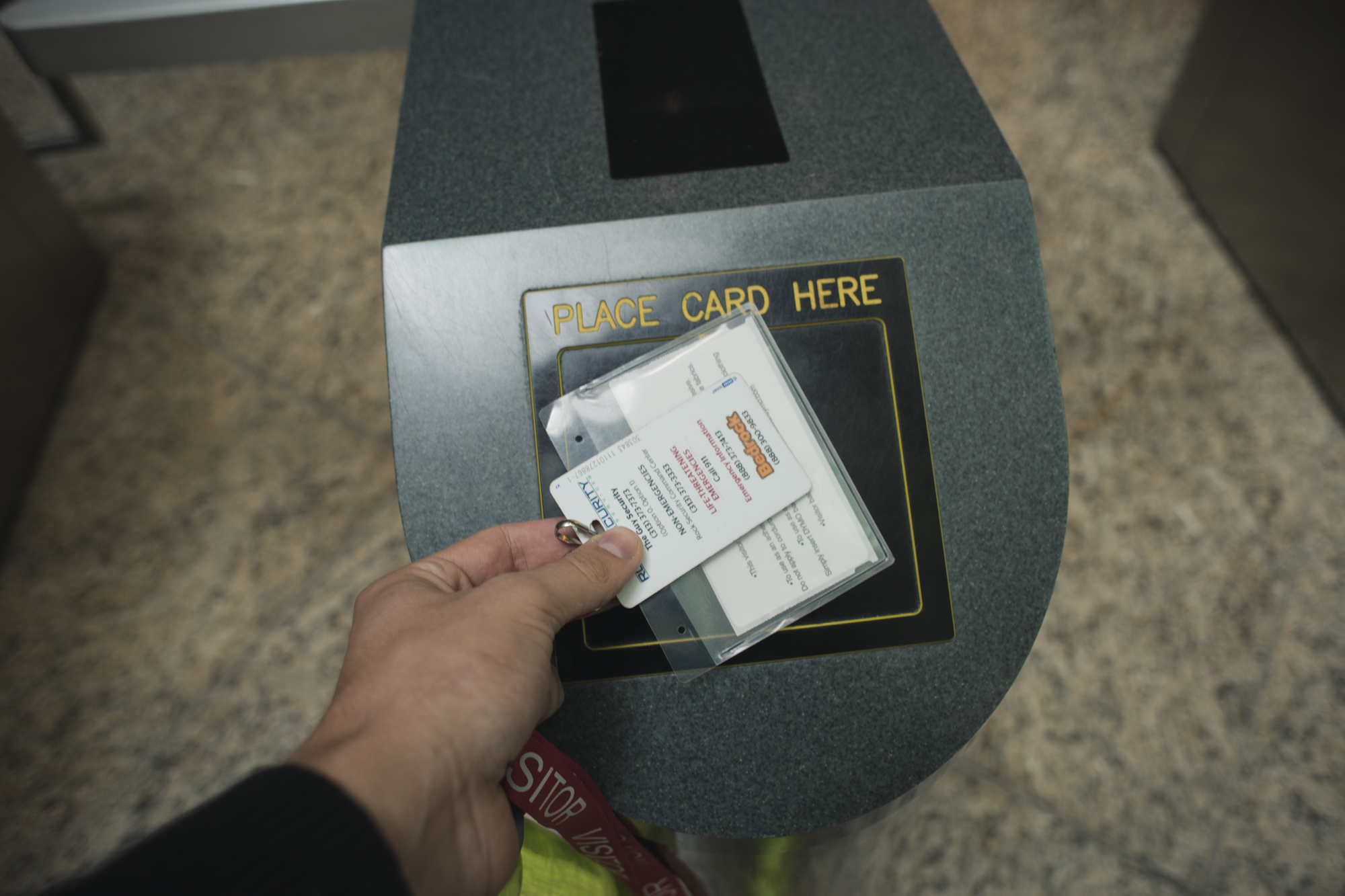
We checked in at the front desk, got our visitors’ passes, walked through the futuristic turnstiles and took the elevator to the tenth floor.

There we were greeted by receptionists who offered us “coffee or water while you wait?” Then we sat down in one of the ten armchairs and looked out into the 360 degree view of window lined offices.
Entering this building was like walking into a new universe. There was no sign of the blight that we saw just blocks away.

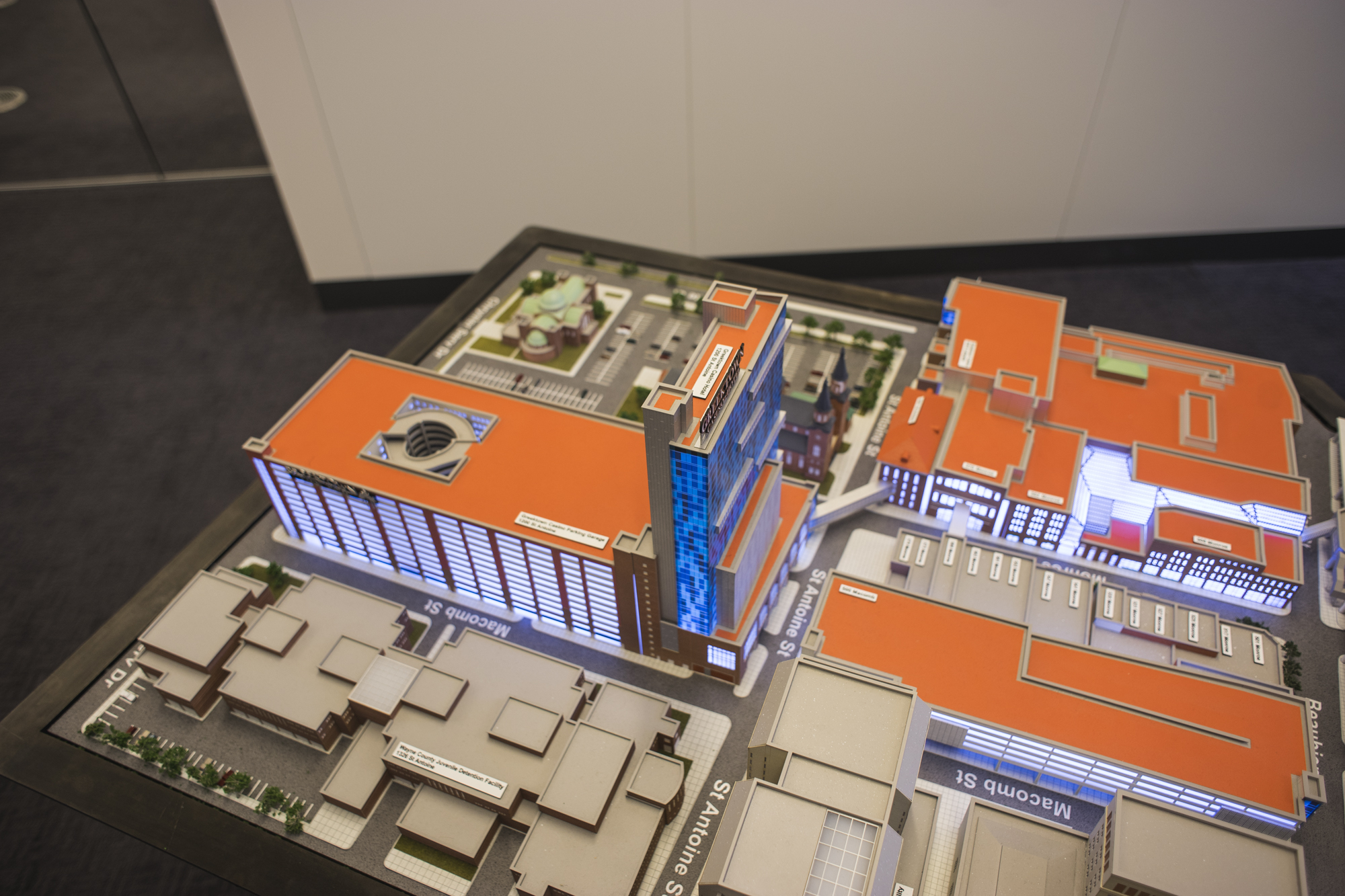
Bryan came to meet us five minutes later and took us through a card-access door to the employee area. They had a fully-rendered model of the city; the properties Bedrock owned all had orange roofs.
Easily 50-60% of the buildings were marked with the Bedrock orange. Apparently the model is not up to date; they’ve acquired several more properties, including a skyscraper right downtown.
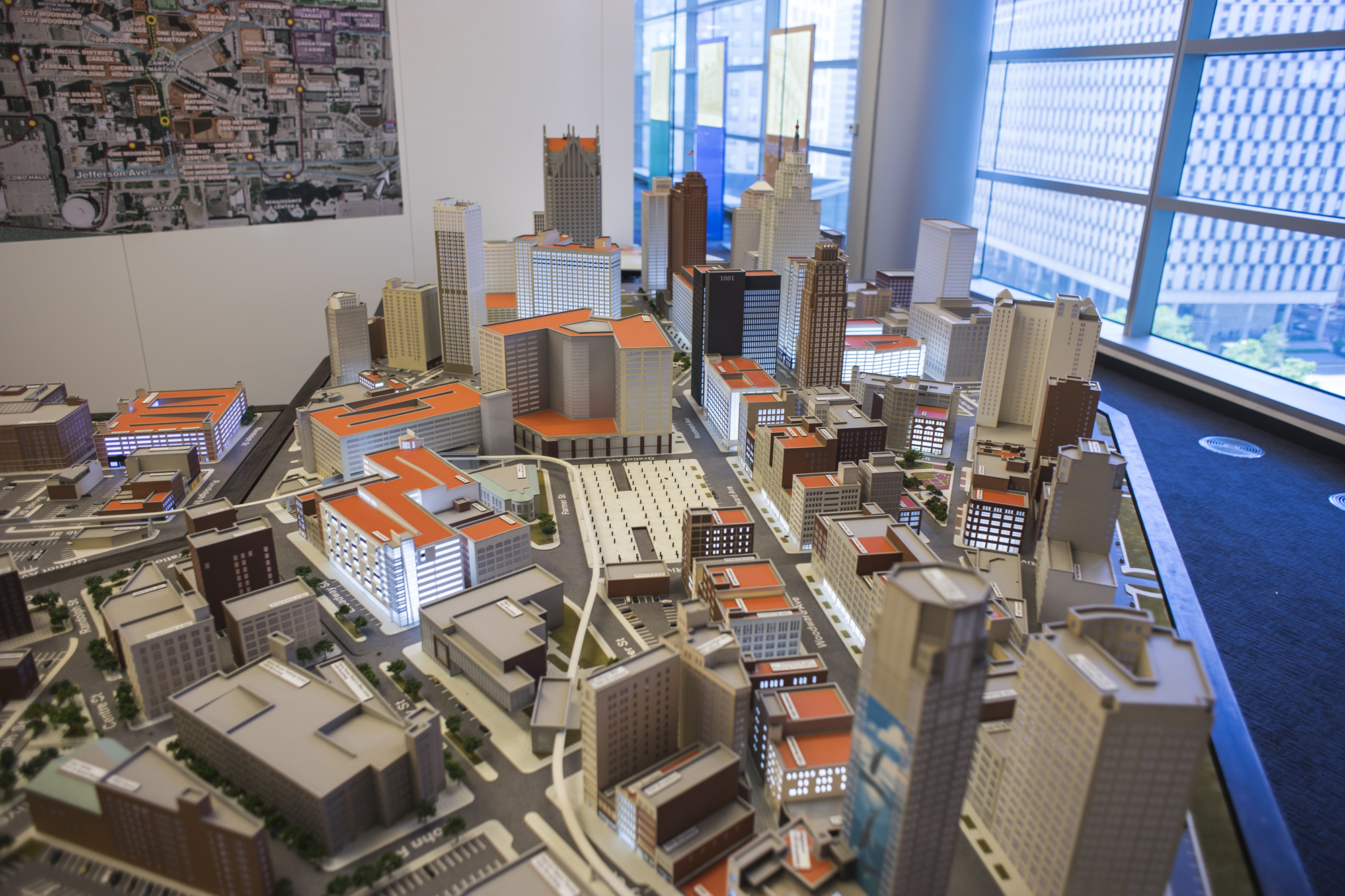
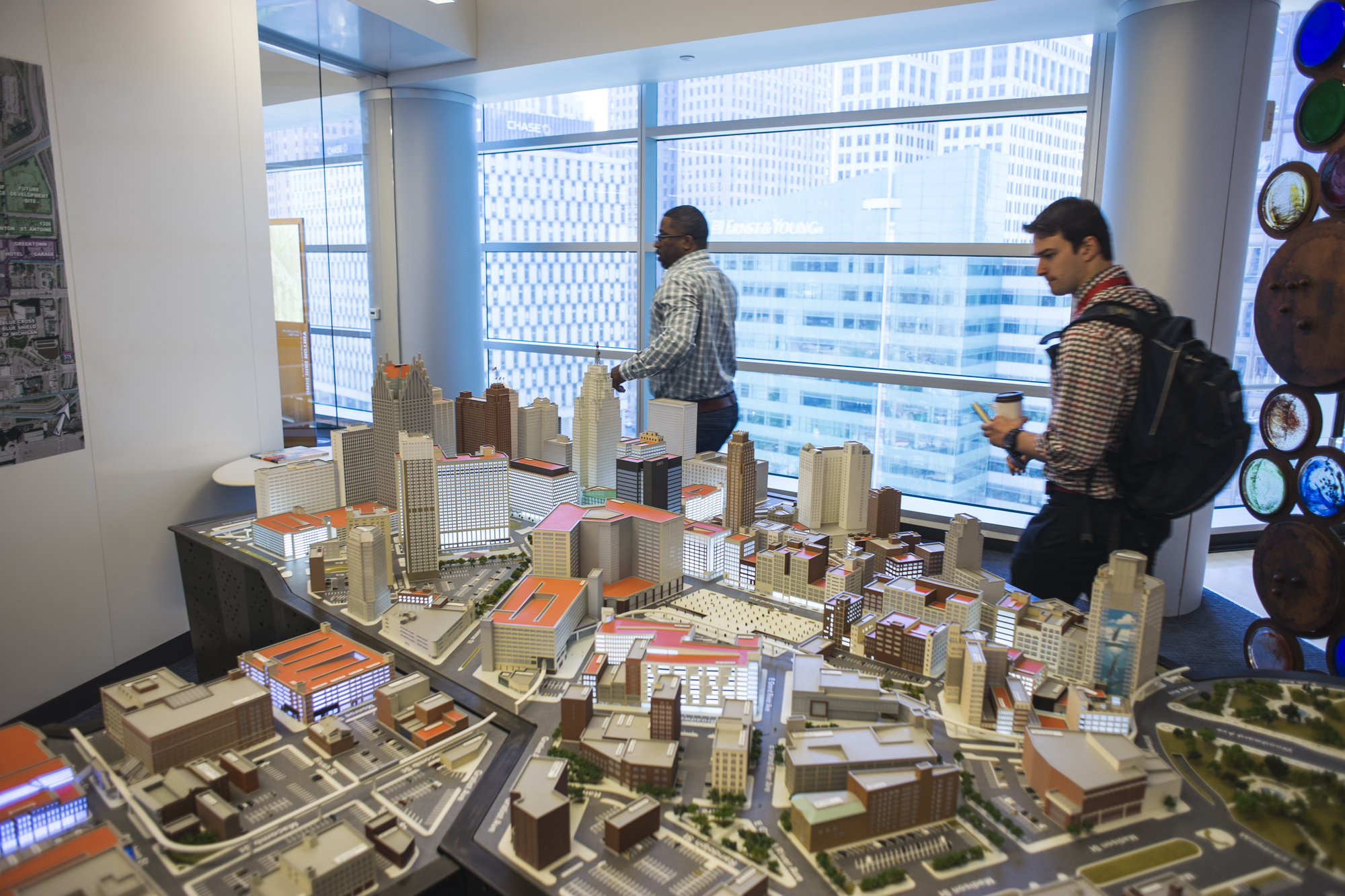
That’s Bryan to the left of Rory
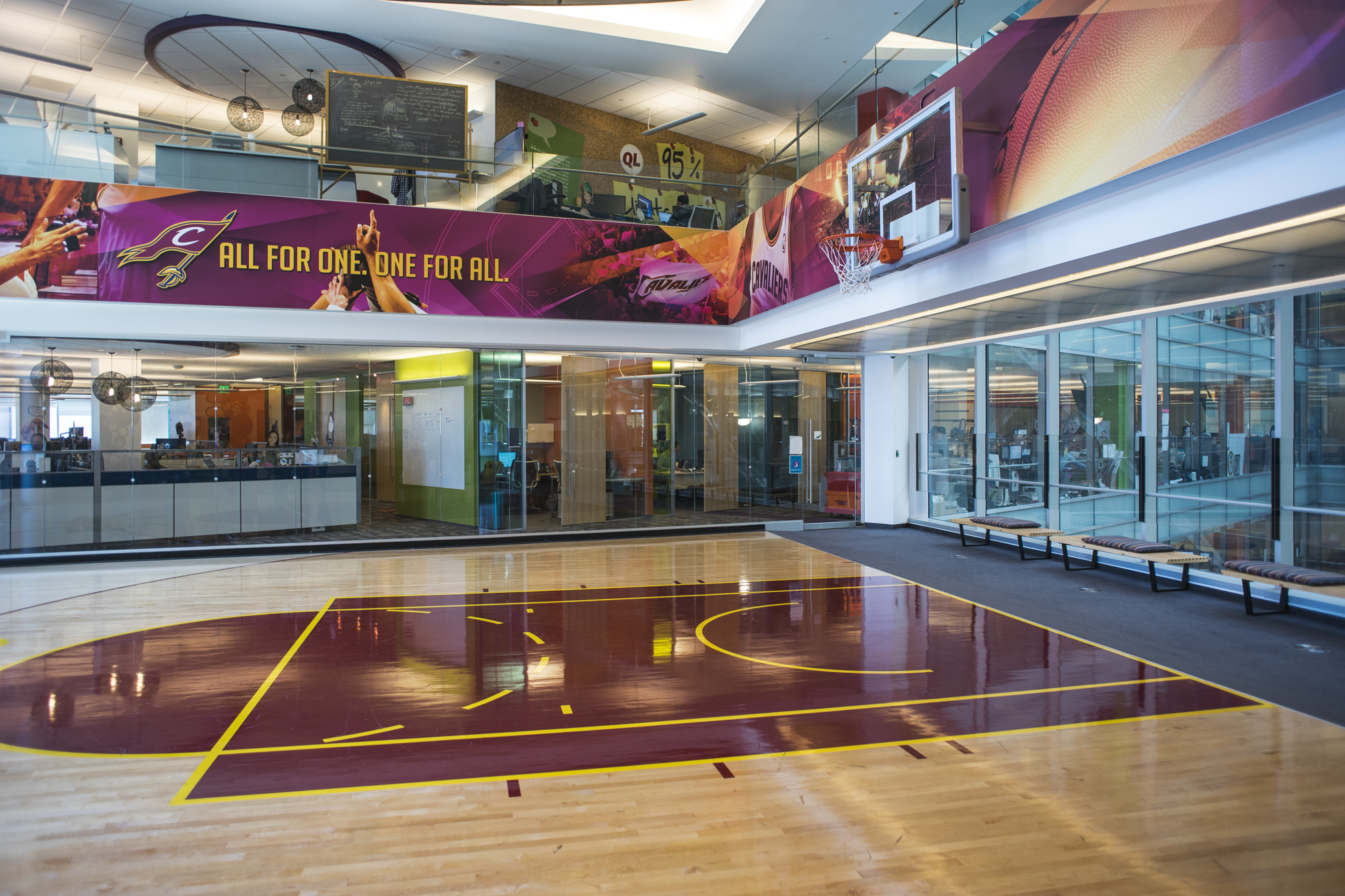
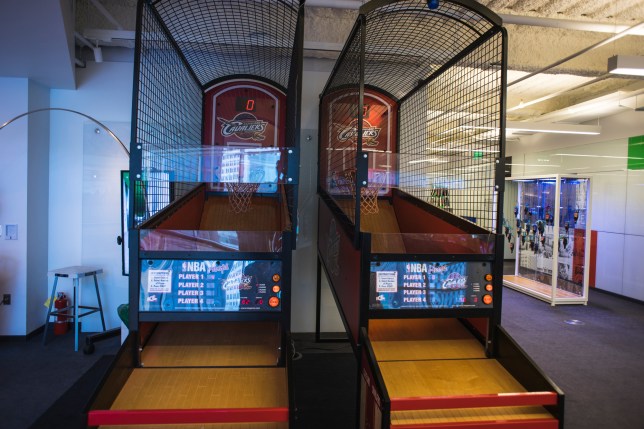
(By the way, there was a half basketball court right next to the model, totally tricked out in Cavaliers decor — Gilbert owns the Cleveland Cavaliers — as well as a TV playing ESPN mounted inside a stadium view panel set up).
Bryan pointed to two properties of interest on the model and we hit the streets to see them in life-size.
On the way he told us how he got there. He is originally from Detroit but was working in Chicago. He knew Dan Gilbert personally because their sons played basketball together. At first, Brian refused Dan’s job offers; he didn’t want to be in Detroit and didn’t want to do the job. They didn’t speak for months until Gilbert offered him a job filling spaces with tenants “who are doing things I really believe in.”
And apparently when they believe in someone they back them: “let’s say you need $375,000 for renovations but only have $175,000; if we really believe in you we’ll front that remaining $200,000. That changes the dynamic of the deal because we’re putting money in that we’ll need to make back.”
We’d prefer not to add to our student debt with business-related debt. But it was a great experience meeting with Brian. We may be in touch, provided we have enough capital.
The property they wanted to rent for anywhere from $60,000/year ($5,000/month) to $80,500/year ($6,708/month). By the way, they only rent; they never sell.
Double Whammy!!
We then had back-to-back meetings with the artistic directors of A Host of People and The Hinterlands, two companies doing devised theatre in Detroit. The more pertinent commonality is that they’d been working in the profession for years before taking on Detroit.
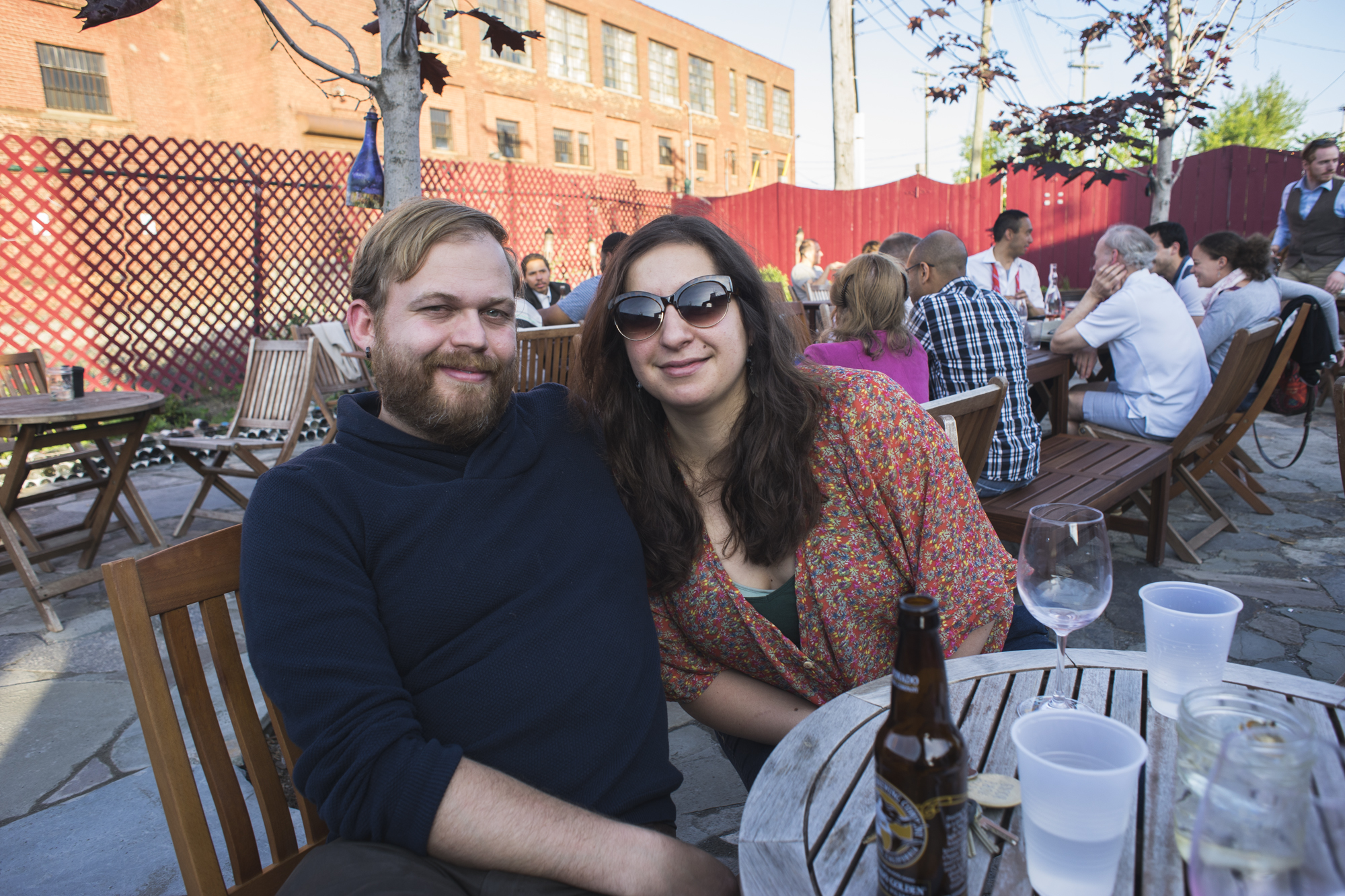
Jake Hooker and Sherrine Azab of A Host of People.
We are fresh out of school, whereas Jake Hooker of AHoP has a master’s and is going for a PhD; Liza Bielby of The Hinterlands also holds a master’s degree. Their counterparts, Sherrine Azab (AHoP) and Richard Newman (Hinterlands) gained a lot of experience in the world; Sherrine spent time in New York working and seeing good work, saying “I used New York as my master’s in a lot of ways”; Richard trained and apprenticed at the Dell’Arte International School of Physical Theatre.
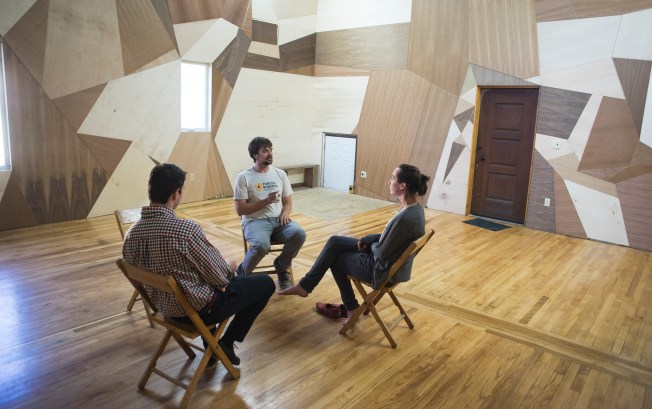
Richard Newman and Liza Bielby of The Hinterlands.
Jake summed it up saying “there’s the training that happens after college…it’s still important to put yourself in situations of deep learning.” This could mean taking workshops, seeing work that stretches our ideas of art, working under masters; developing one’s repertoire of ideas, if you will.
Sherrine suggested Philadelphia as potential landing place: it’s got a crowd willing to see daring work, it’s a larger market than Detroit and it’s two hours from New York City by train. This means we could put up our own work and immerse ourselves in Philly’s more thriving scene as well as New York’s. We would be interested in both seeing NY theatre and working with NY talent.
But the Hinterlands is not necessarily interested in trained actors the same way we are. “We wanted to work on our own timelines, work with non-actors and engage with the community.” The communities they’ve tapped into are the visual arts and music crowds, since their work does not necessarily appeal to the main theatre-going audience. They employ dancers, musicians, visual artists — anyone who fits what they need.
This parallels something Sherrine from AHoP said: “The community is what it is. They have fairly traditional thoughts around what theatre is. We’ve had more success with visual artists.”
Richard said “if you call it theatre no one will come. But if you convince people they’re not really seeing theatre you suddenly have this whole new audience.”
Here is another through line: it’s difficult to make it here.
Both companies flocked to this. AHoP: “More so than anywhere I’ve lived you have no idea what’s going to happen. It could blow up tomorrow, it could be ten years from now…It would be disingenuous to say that it’s not challenging at every turn…but we’re happy. We have no regrets.” Hinterlands: ”Everybody has their own hustle, or multiple hustles because you have to…that multiplicity works really well with us.”
Detroit initially caught our interest with its cost of living and cost of property. Both companies own houses that they work out of; The Hinterlands even owns two houses, one of which they’ve converted to a rehearsal/performance space.
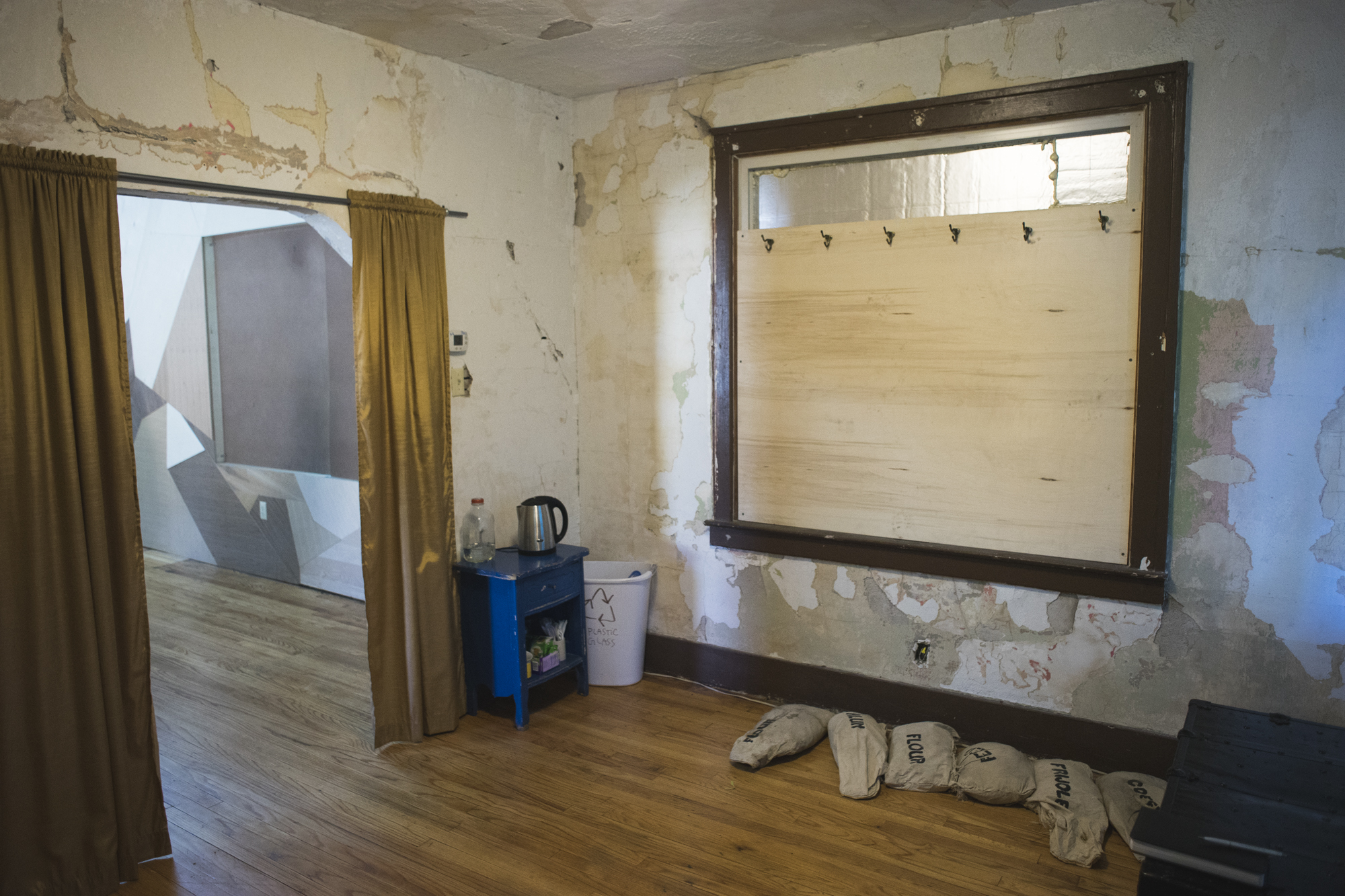
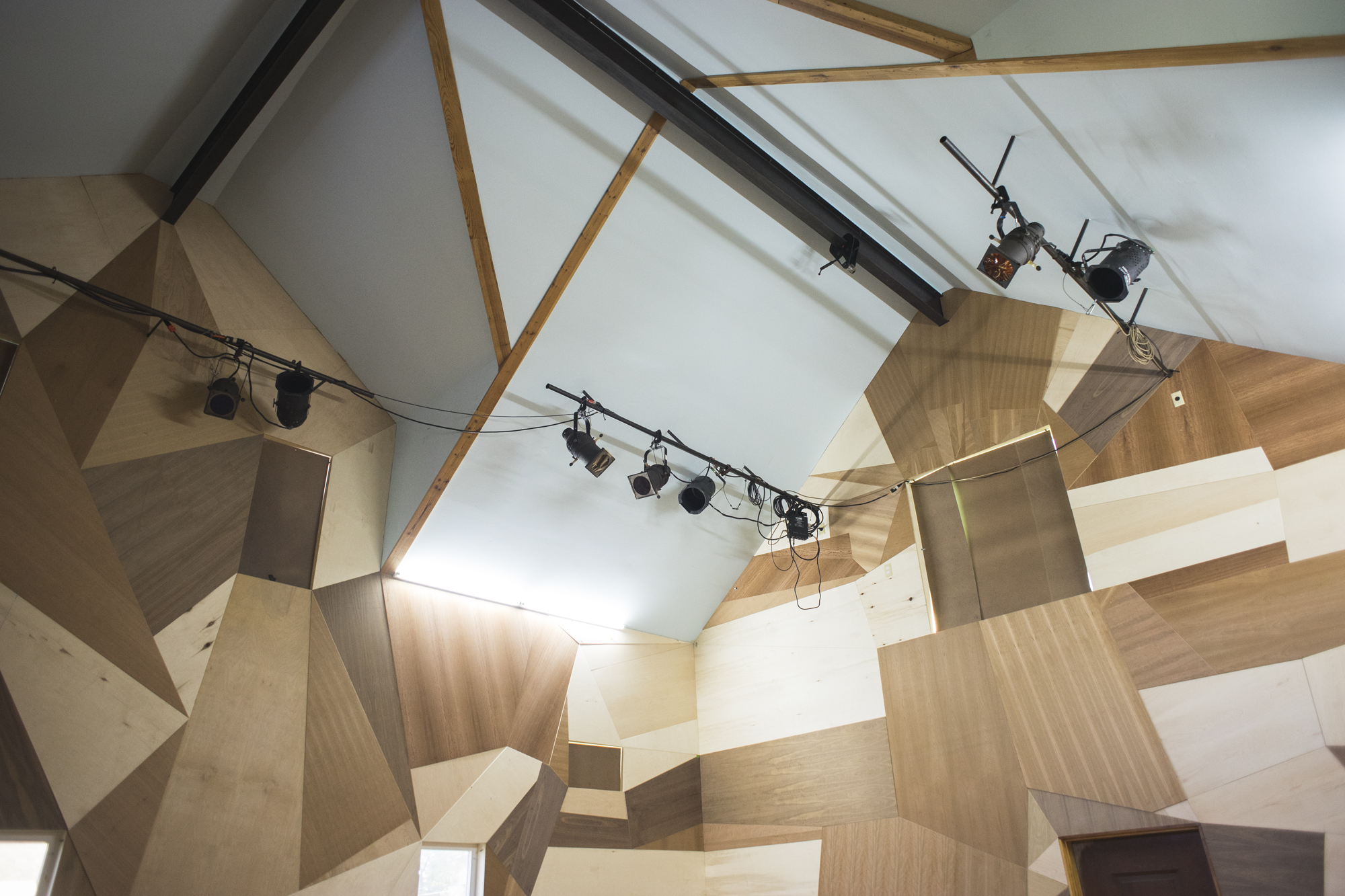
But we’re now seeing that that comes at a cost as well: the cost of building a career.
Ryan and I want to work in the national landscape. We like Detroit, but want the option to move into different, larger markets like New York or Los Angeles. Eventually.
But we’re finding that “eventually” could end up being ten years down the line with the kind of elbow grease it would take to make it in Detroit.
We need to build our artistic vocabularies. The question is should we do that by working in a smaller market to find our voices? Or seek education in the form of apprenticeship and seeing challenging work in a larger market?
Or, like Sherrine said, is there a way to do both?
More on that to come.
All the best,
R&R

 Should a Young Artist Move to Detroit?